AVI3M, Grade 11, Visual Arts
AVI3M COURSE OUTLINE
Course Title: Visual Arts
Grade: 11
Ministry Course Code: AVI3M
Course Type: Open
Credit Value: 1.00
Course Hours: 110
Department: Arts
Revision Date: N/A
Policy Document: The Arts, The Ontario Curriculum, Grades 11 and 12, 2010 (Revised)
http://www.edu.gov.on.ca/eng/curriculum/secondary/arts1112curr2010.pdf
Prerequisite: Visual Arts, Grade 9 or 10, Open
COURSE DESCRIPTION
The course enables students to further develop their knowledge and skills in visual arts. Students will use the creative process to explore a wide range of themes through studio work that may include drawing, painting, sculpting, and printmaking, as well as the creation of collage, multimedia works, and works using emerging technologies. Students will use the critical analysis process when evaluating their own work and the work of others. The course may be delivered as a comprehensive program or through a program focused on a particular art form (e.g., photography, video, computer graphics, information design).
OVERALL EXPECTATIONS
Foundations
By the end of this course, students will:
1. C1. Terminology: demonstrate an understanding of, and use correct terminology when referring to, elements, principles, and other components related to visual arts;
2. C2. Conventions and Techniques: demonstrate an understanding of conventions and techniques used in the creation of visual art works;
3. C3. Responsible Practices: demonstrate an understanding of responsible practices related to visual arts.
Creating and Improving
By the end of this course, students will:
1. A1. The Creative Process: apply the creative process to create a variety of art works, individually and/or collaboratively;
2. A2. The Elements and Principles of Design: apply the elements and principles of design to create art works for the purpose of self-expression and to communicate ideas, information, and/or messages;
3. A3. Production and Presentation: produce art works, using a variety of media/materials and traditional and emerging technologies, tools, and techniques, and demonstrate an understanding of a variety of ways of presenting their works and the works of others.
4. B1. The Critical Analysis Process: demonstrate an understanding of the critical analysis process by examining, interpreting, evaluating, and reflecting on various art works;
5. B2. Art, Society, and Values: demonstrate an understanding of how art works reflect the society in which they were created, and of how they can affect both social and personal values;
6. B3. Connections Beyond the Classroom: describe opportunities and requirements for continued engagement in visual arts.
7. C1. Terminology: demonstrate an understanding of, and use correct terminology when referring to, elements, principles, and other components related to visual arts;
8. C2. Conventions and Techniques: demonstrate an understanding of conventions and techniques used in the creation of visual art works;
Reflecting, Responding, and Analysing
By the end of this course, students will:
1. B1. The Critical Analysis Process: demonstrate an understanding of the critical analysis process by examining, interpreting, evaluating, and reflecting on various art works;
2. B2. Art, Society, and Values: demonstrate an understanding of how art works reflect the society in which they were created, and of how they can affect both social and personal values;
3. B3. Connections Beyond the Classroom: describe opportunities and requirements for continued engagement in visual arts.
OUTLINE OF COURSE CONTENT

.
.
EVALUATION SCHEME
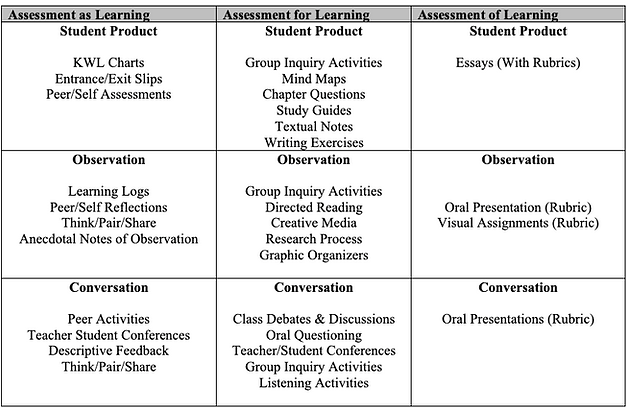
A final grade (percentage mark) is calculated at the end of the course and reflects the quality of the student’s achievement of the overall expectations of the course, in accordance with the provincial curriculum.
The final grade will be determined as follows:
Seventy percent (70%) of the grade will be based on evaluation conducted throughout the course. This portion of the grade should reflect the student’s most consistent level of achievement throughout the course, although special consideration should be given to more recent evidence of achievement.
Thirty percent (30%) of the grade will be based on a final evaluation administered at or towards the end of the course. This evaluation will be based on evidence from one or a combination of the following: an examination, a performance, an essay, and/or another method of evaluation suitable to the course content. The final evaluation allows the student an opportunity to demonstrate comprehensive achievement of the overall expectations for the course.