CGC1W, Grade 9, Exploring Canadian Geography
CGC1W COURSE OUTLINE
Course Title: Exploring Canadian Geography, Grade 9
Grade: 12
Ministry Course Code: CGC1W
Course Type: De-streamed
Credit Value: 1.00
Course Hours: 110
Department: Geography
Revision Date: N/A
Policy Document: https://www.dcp.edu.gov.on.ca/en/curriculum/canadian-and-world-studies/courses/cgc1w/home
COURSE DESCRIPTION
Students will explore relationships within and between Canada’s natural and human systems and how they interconnect with other parts of the world. Students will also examine environmental and economic issues, and their impact related to topics such as natural resources and industries, careers, land use and responsible development, and sustainability. In addition, students will understand the connections that diverse communities and individuals have with the physical environment and each other throughout Canada, including First Nations, Métis, and Inuit perspectives. Students will apply geographic thinking, use the geographic inquiry process, and use geospatial technologies throughout their investigations.
OVERALL EXPECTATIONS
A. Geographic Inquiry and Skill Development
1. use the geographic inquiry process and the concepts of geographic thinking when investigating issues relating to Canadian geography
2. apply in everyday contexts skills, including geospatial technology skills, developed through the investigation of Canadian geography, and identify some careers, including those in the skilled trades, in which a background in geography might be an asset
B. Physical Geography and Physical Processes in Canada
1. describe various characteristics of the natural environment and the spatial distribution of physical features in Canada, and analyze the role of physical processes, phenomena, and events in shaping them
2. analyze interrelationships between physical processes, phenomena, and events and the ways in which various communities in Canada respond to and interact with them
C. Managing Canada’s Resources and Industries
1. analyze characteristics of natural resources and industries in Canada, and factors that affect the accessibility and use of natural resources and the location of industries
2. analyze issues related to the sustainable development of resources and industries in Canada
D. Changing Populations
1. analyze key patterns and trends in demographics and population movement and settlement, and factors that affect these patterns and trends, nationally and for various populations in Canada
2. analyze selected national and global population issues and their implications for Canada and for various people who live in Canada
E. Liveable Communities
1. analyze characteristics and impacts of land use in various communities in Canada, including urban communities, and factors affecting land use and land-use planning
2. analyze issues relating to, and strategies for improving, the sustainability of human systems and communities in Canada
OUTLINE OF COURSE CONTENT

.
.
EVALUATION SCHEME
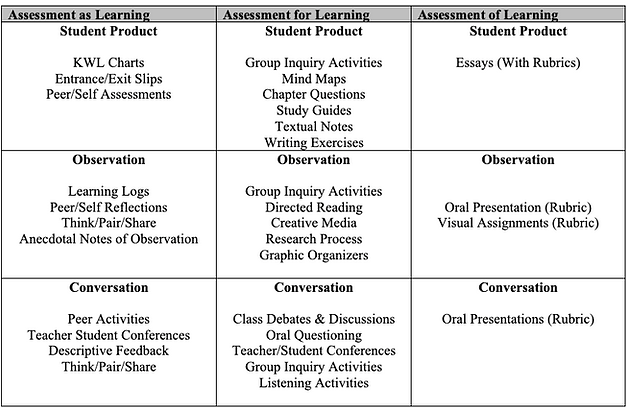
A final grade (percentage mark) is calculated at the end of the course and reflects the quality of the student’s achievement of the overall expectations of the course, in accordance with the provincial curriculum.
The final grade will be determined as follows:
Seventy percent (70%) of the grade will be based on evaluation conducted throughout the course. This portion of the grade should reflect the student’s most consistent level of achievement throughout the course, although special consideration should be given to more recent evidence of achievement.
Thirty percent (30%) of the grade will be based on a final evaluation administered at or towards the end of the course. This evaluation will be based on evidence from one or a combination of the following: an examination, a performance, an essay, and/or another method of evaluation suitable to the course content. The final evaluation allows the student an opportunity to demonstrate comprehensive achievement of the overall expectations for the course.