CGW4U, Grade 12, World Issues: A Geographic Analysis
CGW4U COURSE OUTLINE
Course Title: World Issues: A Geographic Analysis
Grade: 12
Ministry Course Code: CGW4U
Course Type: Academic
Credit Value: 1.00
Course Hours: 108
Department: Canadian & World Studies
Revision Date: N/A
Policy Document: Canadian & World Studies, The Ontario Curriculum, Grades 11 and 12, 2015 (Revised) http://www.edu.gov.on.ca/eng/curriculum/secondary/2015cws11and12.pdf
COURSE DESCRIPTION
The course has five strands. Instruction and learning related to the expectations in strand A are to be interwoven with instruction and learning related to expectations from the other four strands. Strand A must not be seen as independent of the other strands. Student achievement of the expectations in strand A is to be assessed and evaluated throughout the course.
OVERALL EXPECTATIONS
Geographic Inquiry & Skill Development
By the end of this course, students will:
A1. Geographic Inquiry: use the geographic inquiry process and the concepts of geographic thinking when investigating world issues;
A2. Developing Transferable Skills: apply in everyday contexts skills, including spatial skills, developed through geographical investigation, and identify careers in which a background in geography might be an asset.
Spatial Organization: Relationships & Disparities
By the end of this course, students will:
B1. Natural Resource Disparities: analyse relationships between quality of life and access to natural resources in various countries and regions (FOCUS ON: Spatial Significance; Interrelationships).
B2. Population Disparities: analyse relationships between demographic and political factors and quality of life in various countries and regions (FOCUS ON: Interrelationships; Geographic Perspective).
B3. Classifying Regions of the World: explain how various characteristics are used to classify the world into regions or other groupings (FOCUS ON: Spatial Significance; Patterns and Trends).
Sustainability & Stewardship
By the end of this course, students will:
C1. Strategies and Initiatives: analyse strategies and initiatives that support environmental stewardship at a national and global level, and assess their effectiveness in promoting the sustainability of the natural environment (FOCUS ON: Interrelationships; Geographic Perspective).
C2. Population Growth: assess the impact of population growth on the sustainability of natural systems (FOCUS ON: Spatial Significance; Patterns and Trends).
C3. Caring for the Commons: analyse issues relating to the use and management of common-pool resources (FOCUS ON: Interrelationships; Geographic Perspective).
Interactions & Interdependence: Globalization
By the end of this course, students will
D1. Trade and Immigration: analyse the influence of trade agreements and immigration policies on global interdependence and the well-being of countries (FOCUS ON: Interrelationships; Geographic Perspective).
D2. Impacts and Management: analyse issues relating to national and global impacts of globalization from a geographic perspective, and assess responsibilities and approaches for managing these issues (FOCUS ON: Spatial Significance; Geographic Perspective).
D3. Characteristics and Driving Forces: describe the major characteristics of globalization, and analyse factors that are driving the globalizing process (FOCUS ON: Patterns and Trends; Interrelationships).
Social Change & Quality of Life
By the end of this course, students will:
E1. Leadership and Policy: analyse the influence of governments, groups, and individuals on the promotion and management of social change (FOCUS ON: Patterns and Trends; Geographic Perspective).
E2. Agents of Change: analyse impacts of selected agents of change on society and quality of life (FOCUS ON: Interrelationships; Geographic Perspective).
E3. Continuing Challenges: analyse issues relating to human rights, food security, health care, and other challenges to the quality of life of the world’s population (FOCUS ON: Spatial Significance; Patterns and Trends).
OUTLINE OF COURSE CONTENT

.
.
EVALUATION SCHEME
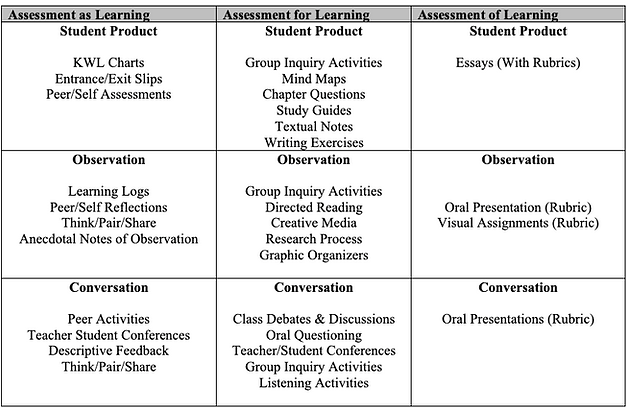
A final grade (percentage mark) is calculated at the end of the course and reflects the quality of the student’s achievement of the overall expectations of the course, in accordance with the provincial curriculum.
The final grade will be determined as follows:
Seventy percent (70%) of the grade will be based on evaluation conducted throughout the course. This portion of the grade should reflect the student’s most consistent level of achievement throughout the course, although special consideration should be given to more recent evidence of achievement.
Thirty percent (30%) of the grade will be based on a final evaluation administered at or towards the end of the course. This evaluation will be based on evidence from one or a combination of the following: an examination, a performance, an essay, and/or another method of evaluation suitable to the course content. The final evaluation allows the student an opportunity to demonstrate comprehensive achievement of the overall expectations for the course.