CHV2O, Grade 10, Civics and Citizenship
CHV2O COURSE OUTLINE
Course Title: Civics and Citizenship, Grade 10
Grade: 10
Ministry Course Code: CHV2O
Course Type: Academic
Credit Value: 0.5
Course Hours: 55
Department: Canadian & World Studies
Revision Date: N/A
Policy Document:
Canadian & World Studies, The Ontario Curriculum, Grades 9 and 10, 2013 (Revised)
http://www.edu.gov.on.ca/eng/curriculum/secondary/canworld910curr2013.pdf
Prerequisite: None
COURSE DESCRIPTION
This course explores rights and responsibilities associated with being an active citizen in a democratic society. Students will explore issues of civic importance such as healthy schools, community planning, environmental responsibility, and the influence of social media, while developing their understanding of the role of civic engagement and of political processes in the local, national, and/or global community. Students will apply the concepts of political thinking and the political inquiry process to investigate, and express informed opinions about, a range of political issues and developments that are both of significance in today’s world and of personal interest to them.
OVERALL EXPECTATIONS
POLITICAL INQUIRY AND SKILL DEVELOPMENT
By the end of this course, students will:
1. A1. Political Inquiry: use the political inquiry process and the concepts of political thinking when investigating issues, events, and developments of civic importance;
2. A2. Developing Transferable Skills: apply in everyday contexts skills developed through investigations related to civics and citizenship education, and identify some careers in which civics and citizenship education might be an asset.
CIVIC AWARENESS
By the end of this course, students will:
1. B1. Civic Issues, Democratic Values: describe beliefs and values associated with democratic citizenship in Canada, and explain how they are related to civic action and to one’s position on civic issues.
2. B2. Governance in Canada: explain, with reference to a range of issues of civic importance, the roles and responsibilities of various institutions, structures, and figures in Canadian governance.
3. B3. Rights and Responsibilities: analyse key rights and responsibilities associated with citizenship, in both the Canadian and global context, and some ways in which these rights are protected.
CIVIC ENGAGEMENT AND ACTION
By the end of this course, students will:
1. C1. Civic Contributions: analyse a variety of civic contributions, and ways in which people can contribute to the common good.
2. C2. Inclusion and Participation: assess ways in which people express their perspectives on issues of civic importance and how various perspectives, beliefs, and values are recognized and represented in communities in Canada.
3. C3. Personal Action on Civic Issues: analyse a civic issue of personal interest and develop a plan of action to address it.
OUTLINE OF COURSE CONTENT

.
.
EVALUATION SCHEME
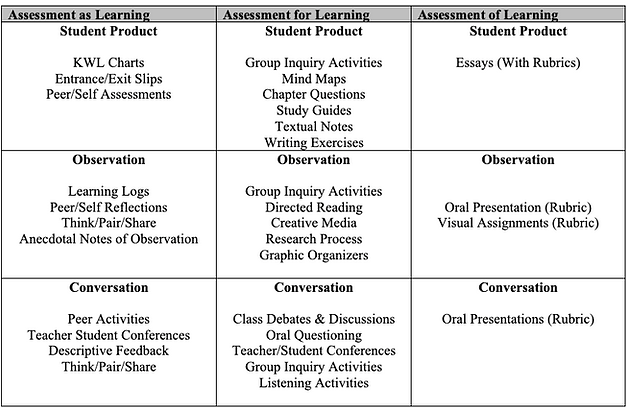
A final grade (percentage mark) is calculated at the end of the course and reflects the quality of the student’s achievement of the overall expectations of the course, in accordance with the provincial curriculum.
The final grade will be determined as follows:
Seventy percent (70%) of the grade will be based on evaluation conducted throughout the course. This portion of the grade should reflect the student’s most consistent level of achievement throughout the course, although special consideration should be given to more recent evidence of achievement.
Thirty percent (30%) of the grade will be based on a final evaluation administered at or towards the end of the course. This evaluation will be based on evidence from one or a combination of the following: an examination, a performance, an essay, and/or another method of evaluation suitable to the course content. The final evaluation allows the student an opportunity to demonstrate comprehensive achievement of the overall expectations for the course.