ESLCO, English as a Second Language, Level 3
ESLCO COURSE OUTLINE
Course Title: English as a Second Language, Level 3, Open
Grade: Open
Ministry Course Code: ESLCO
Course Type: Open
Credit Value: 1.00
Course Hours: 110
Department: English
Revision Date: N/A
Policy Document:
English as a Second Language and English Literacy Development 2007 (Revised)
http://www.edu.gov.on.ca/eng/curriculum/secondary/esl912currb.pdf
Prerequisite: ESL Level 2 or equivalent
COURSE DESCRIPTION
This course further extends students’ skills in listening, speaking, reading, and writing in English for a variety of everyday and academic purposes. Students will make short classroom oral presentations; read a variety of adapted and original texts in English; and write using a variety of text forms. As well, students will expand their academic vocabulary and their study skills to facilitate their transition to the mainstream school program. This course also introduces students to the rights and responsibilities inherent in Canadian citizenship, and to a variety of current Canadian issues.
OVERALL EXPECTATIONS
Listening and Speaking
1. demonstrate the ability to understand, interpret, and evaluate spoken English for a variety of purposes;
2. use speaking skills and strategies to communicate in English for a variety of classroom and social purposes;
3. use correctly the language structures appropriate for this level to communicate orally in English.
Reading
1. read and demonstrate understanding of a variety of texts for different purposes;
2. use a variety of reading strategies throughout the reading process to extract meaning from texts;
3. use a variety of strategies to build vocabulary;
4. locate and extract relevant information from written and graphic texts for a variety of purposes.
Writing
1. write in a variety of forms for different purposes and audiences;
2. organize ideas coherently in writing;
3. use correctly the conventions of written English appropriate for this level, including grammar, usage, spelling, and
punctuation;
4. use the stages of the writing process
Socio-Cultural Competence and Media Literacy
1. use English and non-verbal communication strategies appropriately in a variety of social contexts;
2. demonstrate an understanding of the rights and responsibilities of Canadian citizenship, and of the contributions of
diverse groups to Canadian society;
3. demonstrate knowledge of and adaptation to the Ontario education system;
4. demonstrate an understanding of, interpret, and create a variety of media texts.
OUTLINE OF COURSE CONTENT

.
.
EVALUATION SCHEME
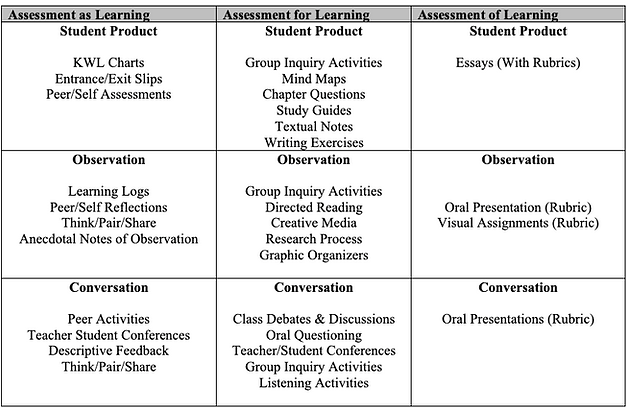
A final grade (percentage mark) is calculated at the end of the course and reflects the quality of the student’s achievement of the overall expectations of the course, in accordance with the provincial curriculum.
The final grade will be determined as follows:
Seventy percent (70%) of the grade will be based on evaluation conducted throughout the course. This portion of the grade should reflect the student’s most consistent level of achievement throughout the course, although special consideration should be given to more recent evidence of achievement.
Thirty percent (30%) of the grade will be based on a final evaluation administered at or towards the end of the course. This evaluation will be based on evidence from one or a combination of the following: an examination, a performance, an essay, and/or another method of evaluation suitable to the course content. The final evaluation allows the student an opportunity to demonstrate comprehensive achievement of the overall expectations for the course.