FSF1D, Core French
FSF1D COURSE OUTLINE
Course Title: Core French
Grade: 9
Ministry Course Code: FSF1D
Course Type: Open
Credit Value: 1.00
Course Hours: 110
Department: French as a Second Language
Revision Date: N/A
Policy Document:
French as a Second Language - Core, Extended, and Immersion. The Ontario Curriculum,
Grades 9 to 12, 2014 http://www.edu.gov.on.ca/eng/curriculum/secondary/fsl912curr2014.pdf
Prerequisite: None
COURSE DESCRIPTION
This is an introductory course for students who have little or no knowledge of French or who have not accumulated the minimum of 600 hours of elementary Core French instruction. Students will begin to understand and speak French in guided and structured interactive settings, and will develop fundamental skills in listening, speaking, reading, and writing through discussing issues and situations that are relevant to their daily lives. Throughout the course, students will develop their awareness of diverse French-speaking communities in Canada and acquire an understanding and appreciation of these communities. They will also develop a variety of skills necessary for lifelong language learning.
OVERALL EXPECTATIONS
A. LISTENING
A1. Listening to Understand: determine meaning in a variety of authentic and adapted oral French texts, using a range of listening strategies;
A2. Listening to Interact: interpret messages accurately while interacting in French for a variety of purposes and with diverse audiences;
A3. Intercultural Understanding: demonstrate an understanding of information in oral French texts about aspects of culture in diverse French-speaking communities and other communities around the world, and of French sociolinguistic conventions used in a variety of situations and communities.
B. SPEAKING
B1. Speaking to Communicate: communicate information and ideas orally in French, using a variety of speaking strategies, appropriate language structures, and language appropriate to the purpose and audience;
B2. Speaking to Interact: participate in spoken interactions in French for a variety of purposes and with diverse
audiences;
B3. Intercultural Understanding: in their spoken communications, demonstrate an awareness of aspects of culture in diverse French-speaking communities and other communities around the world, and of the appropriate use of French sociolinguistic conventions in a variety of situations.
C. READING
C1. Reading Comprehension: determine meaning in a variety of authentic and adapted French texts, using a range of reading comprehension strategies;
C2. Purpose, Form, and Style: identify the purpose(s), characteristics, and aspects of style of a variety of authentic and adapted text forms in French, including fictional, informational, graphic, and media forms;
C3. Intercultural Understanding: demonstrate an understanding of information in French texts about aspects of culture in diverse French-speaking communities and other communities around the world, and of French sociolinguistic conventions used in a variety of situations and communities.
D. WRITING
D1. Purpose, Audience, and Form: write French texts for different purposes and audiences, using a variety of forms and knowledge of language structures and conventions of written French appropriate for this level;
D2. The Writing Process: use the stages of the writing process – including pre-writing, producing drafts, revising, editing, and publishing – to develop and organize content, clarify ideas and expression, correct errors, and present their work effectively;
D3. Intercultural Understanding: in their written work, demonstrate an awareness of aspects of culture in diverse French-speaking communities and other communities around the world, and of the appropriate use of French sociolinguistic conventions in a variety of situations.
OUTLINE OF COURSE CONTENT

.
.
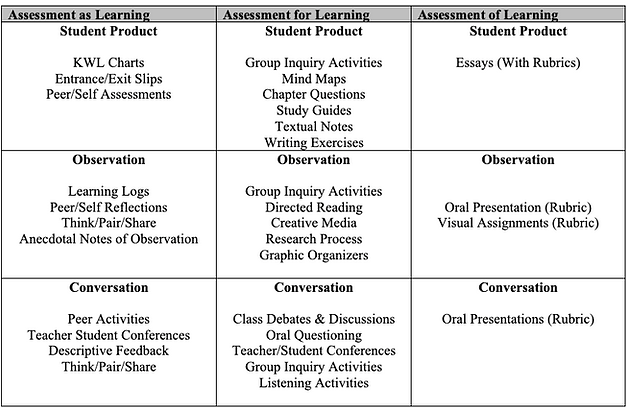
EVALUATION SCHEME
A final grade (percentage mark) is calculated at the end of the course and reflects the quality of the student’s achievement of the overall expectations of the course, in accordance with the provincial curriculum.
The final grade will be determined as follows:
Seventy percent (70%) of the grade will be based on evaluation conducted throughout the course. This portion of the grade should reflect the student’s most consistent level of achievement throughout the course, although special consideration should be given to more recent evidence of achievement.
Thirty percent (30%) of the grade will be based on a final evaluation administered at or towards the end of the course. This evaluation will be based on evidence from one or a combination of the following: an examination, a performance, an essay, and/or another method of evaluation suitable to the course content. The final evaluation allows the student an opportunity to demonstrate comprehensive achievement of the overall expectations for the course.