HFA4U, Grade 12, Nutrition & Health
HFA4U COURSE OUTLINE
Course Title: Nutrition & Health
Grade: 12
Ministry Course Code: HFA4U
Course Type: University
Credit Value: 1.00
Course Hours: 112
Department: Social Sciences & Humanities
Revision Date: N/A
Policy Document: Social Sciences & Humanities, The Ontario Curriculum, Grades 9 to 12, 2013 (Revised) http://www.edu.gov.on.ca/eng/curriculum/secondary/ssciences9to122013.pdf
COURSE DESCRIPTION
This course examines the relationships between food, energy balance, and nutritional status; the nutritional needs of individuals at different stages of life; and the role of nutrition in health and disease. Students will evaluate nutrition-related trends and will determine how food choices can promote food security and environmental responsibility. Students will learn about healthy eating, expand their repertoire
of food-preparation techniques, and develop their social science research skills by investigating issues related to nutrition and health.
OVERALL EXPECTATIONS
RESEARCH & INQUIRY SKILLS
Throughout this course, students will:
A1. Exploring: explore topics related to nutrition and health, and formulate questions to guide their research;
A2. Investigating: create research plans, and locate and select information relevant to their chosen topics, using appropriate social science research and inquiry methods;
A3. Processing Information: assess, record, analyse, and synthesize information gathered through research and inquiry;
A4. Communicating and Reflecting: communicate the results of their research and inquiry clearly and effectively, and reflect on and evaluate their research, inquiry, and communication skills
NUTRITION & HEALTH
By the end of this course, students will:
B1. Nutrients: demonstrate an understanding of nutrients and their connection to physical health;
B2. Food Guides: demonstrate an understanding of Canada’s Food Guide and its role in promoting physical health;
B3. Energy Balance: demonstrate an understanding of the physical processes involved in maintaining energy balance;
B4. Nutritional Status: demonstrate an understanding of their nutrient intake and of factors that affect the nutritional status of individuals and groups.
EATING PATTERNS & TRENDS
By the end of this course, students will:
C1. Nutrition throughout the Lifespan: demonstrate an understanding of food- and nutrition-related issues at different stages in the lifespan;
C2. Nutrition and Disease: demonstrate an understanding of the relationships between nutrition, health, and disease;
C3. Trends and Patterns in Food and Nutrition: demonstrate an understanding of current Canadian trends and patterns in nutritional guidelines and in food production and consumption.
LOCAL & GLOBAL ISSUES
By the end of this course, students will:
D1. Food Security: demonstrate an understanding of various factors involved in achieving and maintaining food security;
D2. Food Production and Supply: demonstrate an understanding of various factors that affect food production and supply;
D3. Food Production and the Environment: demonstrate an understanding of the impact of food production on the environment.
OUTLINE OF COURSE CONTENT

.
.
EVALUATION SCHEME
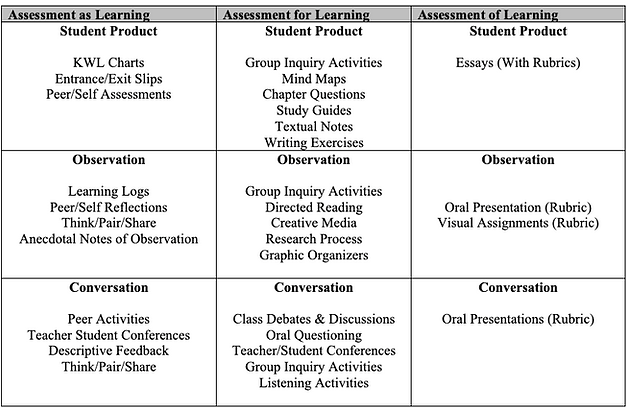
A final grade (percentage mark) is calculated at the end of the course and reflects the quality of the student’s achievement of the overall expectations of the course, in accordance with the provincial curriculum.
The final grade will be determined as follows:
Seventy percent (70%) of the grade will be based on evaluation conducted throughout the course. This portion of the grade should reflect the student’s most consistent level of achievement throughout the course, although special consideration should be given to more recent evidence of achievement.
Thirty percent (30%) of the grade will be based on a final evaluation administered at or towards the end of the course. This evaluation will be based on evidence from one or a combination of the following: an examination, a performance, an essay, and/or another method of evaluation suitable to the course content. The final evaluation allows the student an opportunity to demonstrate comprehensive achievement of the overall expectations for the course.