HFC3M, Grade 11, Food & Culture
HFC3M COURSE OUTLINE
Course Title: Food & Culture
Grade: 11
Ministry Course Code: HFC3M
Course Type: University/College Preparation
Credit Value: 1.00
Course Hours: 110
Department: Social Studies & Humanities
Revision Date: N/A
Policy Document: Social Studies & Humanities, The Ontario Curriculum, Grades 9 to 12, 2013 (Revised) http://www.edu.gov.on.ca/eng/curriculum/secondary/ssciences9to122013.pdf
COURSE DESCRIPTION
This course focuses on the flavours, aromas, cooking techniques, foods, and cultural traditions of world cuisines. Students will explore the origins of and developments in diverse food traditions. They will demonstrate the ability to cook with ingredients and equipment from a variety of cultures, compare food-related etiquette in many countries and cultures, and explain how Canadian food choices and traditions have been influenced by other cultures. Students will develop practical skills and apply social science research methods while investigating foods and food practices from around the world.
OVERALL EXPECTATIONS
Research & Inquiry Skills
Throughout this course, students will:
A1. Exploring: explore topics related to food and culture, and formulate questions to guide their research;
A2. Investigating: create research plans, and locate and select information relevant to their chosen topics, using appropriate social science research and inquiry methods;
A3. Processing Information: assess, record, analyse, and synthesize information gathered through research and inquiry;
A4. Communicating and Reflecting: communicate the results of their research and inquiry clearly and effectively, and reflect on and evaluate their research, inquiry, and communication skills.
Culture, Foods & Food Practices
By the end of this course, students will:
B1. Food Choices: demonstrate an understanding of the factors that influence food choices, with reference to a variety of cultures;
B2. Food Guidelines: demonstrate an understanding of the key recommendations in Canada’s Food Guide and the food and nutrition guidelines of other countries;
B3. Culture and Food Habits: demonstrate an understanding of the influence of culture on how people obtain, prepare, serve, and consume food.
Foods & Flavours
By the end of this course, students will:
C1. Food Availability: demonstrate an understanding of the relationship between geography and the foods naturally found and/or produced in Canada and various other countries;
C2. Sources of Foods: demonstrate an understanding of the sources of foods eaten in Canada and in various other countries/cultures;
C3. Flavours of the World: demonstrate an understanding of the characteristic flavours, aromas, herbs, and spices associated with cuisines of various countries/cultures.
Food-Preparation Skills
By the end of this course, students will:
D1. Kitchen Safety: demonstrate an understanding of practices that ensure or enhance kitchen safety;
D2. Food Safety: demonstrate an understanding of practices that ensure or enhance food safety;
D3. Food Preparation: demonstrate skills used in food preparation in various countries/cultures;
D4. Kitchen Literacy and Numeracy: demonstrate the literacy and numeracy skills required in food preparation.
OUTLINE OF COURSE CONTENT

.
.
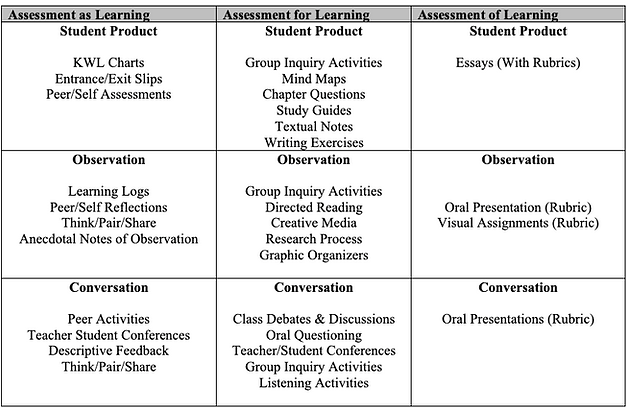
EVALUATION SCHEME
A final grade (percentage mark) is calculated at the end of the course and reflects the quality of the student’s achievement of the overall expectations of the course, in accordance with the provincial curriculum.
The final grade will be determined as follows:
Seventy percent (70%) of the grade will be based on evaluation conducted throughout the course. This portion of the grade should reflect the student’s most consistent level of achievement throughout the course, although special consideration should be given to more recent evidence of achievement.
Thirty percent (30%) of the grade will be based on a final evaluation administered at or towards the end of the course. This evaluation will be based on evidence from one or a combination of the following: an examination, a performance, an essay, and/or another method of evaluation suitable to the course content. The final evaluation allows the student an opportunity to demonstrate comprehensive achievement of the overall expectations for the course.