MDM4U, Grade 12, Mathematics of Data Management
MDM4U COURSE OUTLINE
Course Title: Mathematics of Data Management
Grade: 12
Ministry Course Code: MDM4U
Course Type: University
Credit Value: 1.00
Course Hours: 115
Department: Mathematics
Revision Date: N/A
Policy Document: Mathematics, The Ontario Curriculum, Grades 11 and 12, 2007 (Revised)
http://www.edu.gov.on.ca/eng/curriculum/secondary/math1112currb.pdf
COURSE DESCRIPTION
This course broadens students’ understanding of mathematics as it relates to managing data. Students will apply methods for organizing and analysing large amounts of information; solve problems involving probability and statistics; and carry out a culminating investigation that integrates statistical concepts and skills. Students will also refine their use of the mathematical processes necessary for success in senior mathematics. Students planning to enter university programs in business, the social sciences, and the humanities will find this course of particular interest.
OVERALL EXPECTATIONS
Counting & Probability
By the end of this course, students will:
solve problems involving the probability of an event or a combination of events for discrete sample spaces;
solve problems involving the application of permutations and combinations to determine the probability of an event.
Probability Distributions
By the end of this course, students will:
demonstrate an understanding of discrete probability distributions, represent them numerically, graphically, and algebraically, determine expected values, and solve related problems from a variety of applications;
demonstrate an understanding of continuous probability distributions, make connections to discrete probability distributions, determine standard deviations, describe key features of the normal distribution, and solve related problems from a variety of applications.
Organization of Data for Analysis
By the end of this course, students will:
demonstrate an understanding of the role of data in statistical studies and the variability inherent in data, and distinguish different types of data;
describe the characteristics of a good sample, some sampling techniques, and principles of primary data collection, and collect and organize data to solve a problem.
Statistical Analysis
By the end of this course, students will:
analyse, interpret, and draw conclusions from one-variable data using numerical and graphical summaries;
analyse, interpret, and draw conclusions from two-variable data using numerical, graphical, and algebraic summaries;
demonstrate an understanding of the applications of data management used by the media and the advertising industry and in various occupations.
Culminating Data Management Investigation
By the end of this course, students will:
design and carry out a culminating investigation* that requires the integration and application of the knowledge and skills related to the expectations of this course;
communicate the findings of a culminating investigation and provide constructive critiques of the investigations of others.
OUTLINE OF COURSE CONTENT

.
.
EVALUATION SCHEME
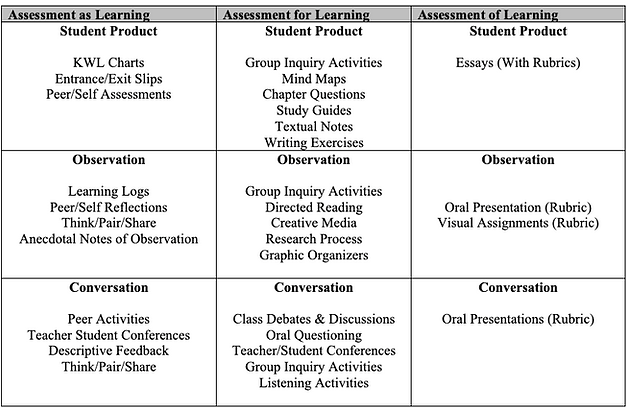
A final grade (percentage mark) is calculated at the end of the course and reflects the quality of the student’s achievement of the overall expectations of the course, in accordance with the provincial curriculum.
The final grade will be determined as follows:
Seventy percent (70%) of the grade will be based on evaluation conducted throughout the course. This portion of the grade should reflect the student’s most consistent level of achievement throughout the course, although special consideration should be given to more recent evidence of achievement.
Thirty percent (30%) of the grade will be based on a final evaluation administered at or towards the end of the course. This evaluation will be based on evidence from one or a combination of the following: an examination, a performance, an essay, and/or another method of evaluation suitable to the course content. The final evaluation allows the student an opportunity to demonstrate comprehensive achievement of the overall expectations for the course.