OLC4O, Grade 12, Ontario Secondary School Literacy Course
OLC4O COURSE OUTLINE
Course Title: Ontario Secondary School Literacy Course
Grade: 12
Ministry Course Code: OLC4O
Course Type: Open
Credit Value: 1.00
Course Hours: 110
Department: English
Revision Date: N/A
Policy Document: The Ontario Curriculum, English, The Ontario Secondary School Literacy Course (OSSLC), Grade 12, 2003 http://www.edu.gov.on.ca/eng/curriculum/secondary/english12curr.pdf
COURSE DESCRIPTION
This course is designed to help students acquire and demonstrate the cross-curricular literacy skills that are evaluated by the Ontario Secondary School Literacy Test (OSSLT). Students who complete the course successfully will meet the provincial literacy requirement for graduation. Students will read a variety of informational, narrative, and graphic texts and will produce a variety of forms of writing, including summaries, information paragraphs, opinion pieces, and news reports. Students will also maintain and manage a portfolio containing a record of their reading experiences and samples of their writing.
OVERALL EXPECTATIONS
Building Reading Skills
By the end of this course, students will:
· demonstrate the ability to read and respond to a variety of texts;
· demonstrate understanding of the organizational structure and features of a variety of informational, narrative, and graphic texts, including information paragraphs, opinion pieces, textbooks, newspaper reports and magazine stories, and short fiction;
· demonstrate understanding of the content and meaning of informational, narrative, and graphic texts that they have read using a variety of reading strategies;
· use a variety of strategies to understand unfamiliar and specialized words and expressions in informational, narrative, and graphic texts.
Building Writing Skills
By the end of this course, students will:
· demonstrate the ability to use the writing process by generating and organizing ideas and producing first drafts, revised drafts, and final polished pieces to complete a variety of writing tasks;
· use knowledge of writing forms, and of the connections between form, audience, and purpose, to write summaries, information paragraphs, opinion pieces (i.e., series of paragraphs expressing an opinion), news reports, and personal reflections, incorporating graphic elements where necessary and appropriate.
Understanding and Assessing Growth in Literacy
By the end of this course, students will:
· demonstrate understanding of the importance of communication skills in their everyday lives – at school, at work, and at home;
· demonstrate understanding of their own roles and responsibilities in the learning process;
· demonstrate understanding of the reading and writing processes and of the role of reading and writing in learning;
· demonstrate understanding of their own growth in literacy during the course.
OUTLINE OF COURSE CONTENT

.
.
EVALUATION SCHEME
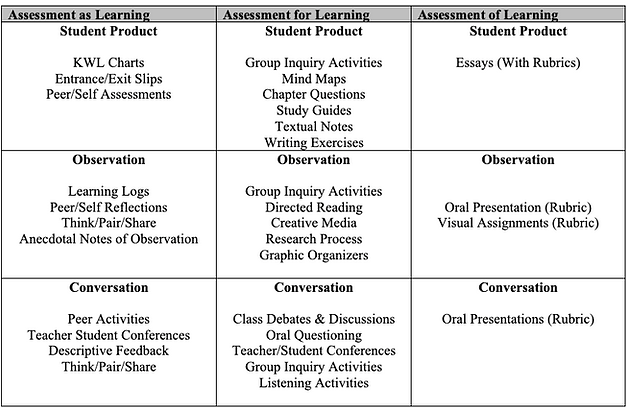
A final grade (percentage mark) is calculated at the end of the course and reflects the quality of the student’s achievement of the overall expectations of the course, in accordance with the provincial curriculum.
The final grade will be determined as follows:
Seventy percent (70%) of the grade will be based on evaluation conducted throughout the course. This portion of the grade should reflect the student’s most consistent level of achievement throughout the course, although special consideration should be given to more recent evidence of achievement.
Thirty percent (30%) of the grade will be based on a final evaluation administered at or towards the end of the course. This evaluation will be based on evidence from one or a combination of the following: an examination, a performance, an essay, and/or another method of evaluation suitable to the course content. The final evaluation allows the student an opportunity to demonstrate comprehensive achievement of the overall expectations for the course.