PPL1O, Grade 9, Healthy Active Living Education
PPL1O COURSE OUTLINE
Course Title: Healthy Active Living Education, Grade 9
Grade: 9
Ministry Course Code: PPL1O
Course Type: Open
Credit Value: 0.5
Course Hours: 55
Department: Health and Physical Education
Revision Date: N/A
Policy Document:
The Ontario Curriculum Grades 9 to 12 Health and Physical Education
https://www.edu.gov.on.ca/eng/curriculum/secondary/health9to12.pdf
Prerequisite: None
COURSE DESCRIPTION
This course equips students with the knowledge and skills they need to make healthy choices now and lead healthy, active lives in the future. Through participation in a wide range of physical activities, students develop knowledge and skills related to movement competence and personal fitness that provide a foundation for active living. Students also acquire an understanding of the factors and skills that contribute to healthy development and learn how their own well-being is affected by, and affects, the world around them. Students build their sense of self, learn to interact positively with others, and develop their ability to think critically and creatively.
OVERALL EXPECTATIONS
Active living
By the end of this course, students will:
A1. participate actively and regularly in a wide variety of physical activities, and demonstrate an understanding of factors that can influence and support their participation in physical activity now and throughout their lives;
A2. demonstrate an understanding of the importance of being physically active, and apply physical fitness concepts and practices that contribute to healthy, active living;
A3. demonstrate responsibility for their own safety and the safety of others as they participate in physical activities.
Movement complete: Skills, Concepts, and Strategy
By the end of this course, students will:
B1. perform movement skills, demonstrating an understanding of the basic requirements of the skills and applying movement concepts as appropriate, as they engage in a variety of physical activities;
B2. apply movement strategies appropriately, demonstrating an understanding of the components of a variety of physical activities, in order to enhance their ability to participate successfully in those activities.
Healthy living
By the end of this course, students will:
C1. demonstrate an understanding of factors that contribute to healthy development;
C2. demonstrate the ability to apply health knowledge and living skills to make reasoned decisions and take appropriate actions relating to their personal health and well-being;
C3. demonstrate the ability to make connections that relate to health and well-being – how their choices and behaviors affect both themselves and others, and how factors in the world around them affect their own and others’ health and well-being.
OUTLINE OF COURSE CONTENT

.
.
EVALUATION SCHEME
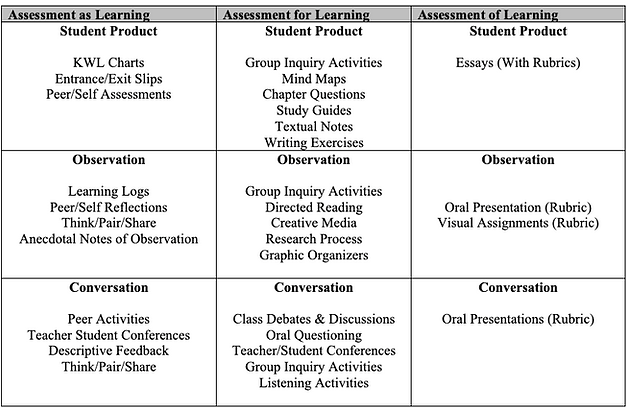
A final grade (percentage mark) is calculated at the end of the course and reflects the quality of the student’s achievement of the overall expectations of the course, in accordance with the provincial curriculum.
The final grade will be determined as follows:
Seventy percent (70%) of the grade will be based on evaluation conducted throughout the course. This portion of the grade should reflect the student’s most consistent level of achievement throughout the course, although special consideration should be given to more recent evidence of achievement.
Thirty percent (30%) of the grade will be based on a final evaluation administered at or towards the end of the course. This evaluation will be based on evidence from one or a combination of the following: an examination, a performance, an essay, and/or another method of evaluation suitable to the course content. The final evaluation allows the student an opportunity to demonstrate comprehensive achievement of the overall expectations for the course.