PPL3O, Grade 11, Healthy Active Living Education
PPL3O COURSE OUTLINE
Course Title: Healthy Active Living Education
Grade: 11
Ministry Course Code: PPL3O
Course Type: Open
Credit Value: 1.00
Course Hours: 110
Department: Health and Physical Education
Revision Date: N/A
Policy Document: Health and Physical Education, The Ontario Curriculum, Grades 9 and 12, 2015 (Revised)
COURSE DESCRIPTION
PPL3O online enables students to further develop the knowledge and skills they need to make healthy choices now and lead healthy, active lives in the future. Through participation in a wide range of physical activities and exposure to a broader range of activity settings, students enhance their movement competence, personal fitness, and confidence. Students also acquire an understanding of the factors and skills that contribute to healthy development and learn how their own well-being is affected by, and affects, the world around them. In PPL3O online, students build their sense of self, learn to interact positively with others, and develop their ability to think critically and creatively.
OVERALL EXPECTATIONS
Exponential & Logarithmic Functions
By the end of this course, students will:
demonstrate an understanding of the relationship between exponential expressions and logarithmic expressions, evaluate logarithms, and apply the laws of logarithms to simplify numeric expressions;
identify and describe some key features of the graphs of logarithmic functions, make connections among the numeric, graphical, and algebraic representations of logarithmic functions, and solve related problems graphically;
solve exponential and simple logarithmic equations in one variable algebraically, including those in problems arising from real-world applications.
Trigonometric Functions
By the end of this course, students will:
demonstrate an understanding of the meaning and application of radian measure;
make connections between trigonometric ratios and the graphical and algebraic representations of the corresponding trigonometric functions and between trigonometric functions and their reciprocals, and use these connections to solve problems;
solve problems involving trigonometric equations and prove trigonometric identities.
Polynomial & Rational Functions
By the end of this course, students will:
identify and describe some key features of polynomial functions, and make connections between the numeric, graphical, and algebraic representations of polynomial functions;
identify and describe some key features of the graphs of rational functions, and represent rational functions graphically;
solve problems involving polynomial and simple rational equations graphically and algebraically;
demonstrate an understanding of solving polynomial and simple rational inequalities.
Characteristics of Functions
By the end of this course, students will:
demonstrate an understanding of average and instantaneous rate of change, and determine, numerically and graphically, and interpret the average rate of change of a function over a given interval and the instantaneous rate of change of a function at a given point;
determine functions that result from the addition, subtraction, multiplication, and division of two functions and from the composition of two functions, describe some properties of the resulting functions, and solve related problems;
compare the characteristics of functions, and solve problems by modelling and reasoning with functions, including problems with solutions that are not accessible by standard algebraic techniques.
OUTLINE OF COURSE CONTENT

.
.
EVALUATION SCHEME
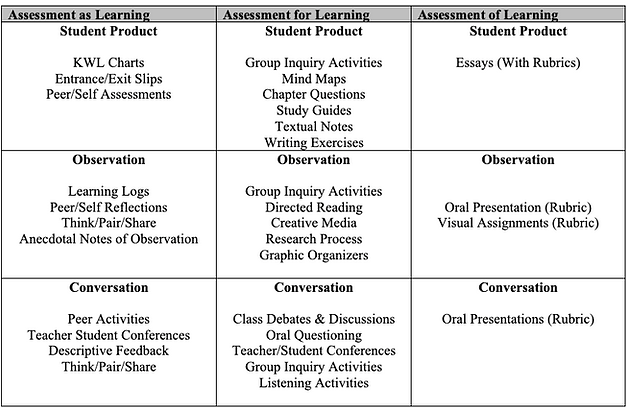
A final grade (percentage mark) is calculated at the end of the course and reflects the quality of the student’s achievement of the overall expectations of the course, in accordance with the provincial curriculum.
The final grade will be determined as follows:
Seventy percent (70%) of the grade will be based on evaluation conducted throughout the course. This portion of the grade should reflect the student’s most consistent level of achievement throughout the course, although special consideration should be given to more recent evidence of achievement.
Thirty percent (30%) of the grade will be based on a final evaluation administered at or towards the end of the course. This evaluation will be based on evidence from one or a combination of the following: an examination, a performance, an essay, and/or another method of evaluation suitable to the course content. The final evaluation allows the student an opportunity to demonstrate comprehensive achievement of the overall expectations for the course.