SCH3U, Grade 11, Chemistry
SCH3U COURSE OUTLINE
Course Title: Chemistry, Grade 11, University Preparation
Grade: 11
Ministry Course Code: SCH3U
Course Type: University Preparation
Credit Value: 1.00
Course Hours: 110
Department: Science
Revision Date: N/A
Policy Document: Science, The Ontario Curriculum, Grades 11 and 12, 2008 (Revised)
http://www.edu.gov.on.ca/eng/curriculum/secondary/2009science11_12.pdf
COURSE DESCRIPTION
Chemistry 11 - SCH3U course enables students to deepen their understanding of chemistry through the study of the properties of chemicals and chemical bonds; chemical reactions and quantitative relationships in those reactions; solutions and solubility; and atmospheric chemistry and the behaviour of gases. Students will further develop their analytical skills and investigate the qualitative and quantitative properties of matter, as well as the impact of some common chemical reactions on society and the environment.
OVERALL EXPECTATIONS
A. Scientific Investigation Skills and Career Exploration
Demonstrate scientific investigation skills (related to both inquiry and research) in the four areas of skills (initiating and planning, performing and recording, analysing and interpreting, and communicating);
Identify and describe careers related to the fields of science under study, and describe the contributions of scientists, including Canadians, to those fields.
B. Matter, Chemical Trends, and Chemical Bonding
Analyse the properties of commonly used chemical substances and their effects on human health and the environment, and propose ways to lessen their impact;
Investigate physical and chemical properties of elements and compounds, and use various methods to visually represent them;
Demonstrate an understanding of periodic trends in the periodic table and how elements combine to form chemical bonds.
C. Chemical Reactions
Analyse chemical reactions used in a variety of applications, and assess their impact on society and the environment;
Investigate different types of chemical reactions;
Demonstrate an understanding of the different types of chemical reactions.
D. Quantities in Chemical Reactions
Analyse processes in the home, the workplace, and the environmental sector that use chemical quantities and calculations, and assess the importance of quantitative accuracy in industrial chemical processes;
Investigate quantitative relationships in chemical reactions, and solve related problems;
Demonstrate an understanding of the mole concept and its significance to the quantitative analysis of chemical reactions.
E. Solutions and Solubility
Analyse the origins and effects of water pollution, and a variety of economic, social, and environmental issues related to drinking water;
Investigate qualitative and quantitative properties of solutions, and solve related problems;
Demonstrate an understanding of qualitative and quantitative properties of solutions.
F. Gases and Atmospheric Chemistry
Analyse the cumulative effects of human activities and technologies on air quality, and describe some Canadian initiatives to reduce air pollution, including ways to reduce their own carbon footprint;
Investigate gas laws that explain the behaviour of gases, and solve related problems;
Demonstrate an understanding of the laws that explain the behaviour of gases.
OUTLINE OF COURSE CONTENT

.
.
EVALUATION SCHEME
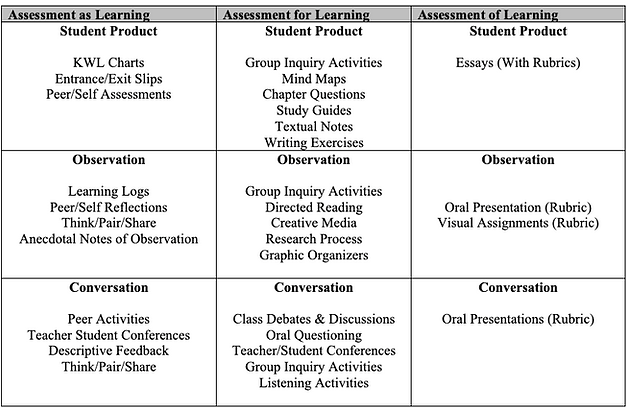
A final grade (percentage mark) is calculated at the end of the course and reflects the quality of the student’s achievement of the overall expectations of the course, in accordance with the provincial curriculum.
The final grade will be determined as follows:
Seventy percent (70%) of the grade will be based on evaluation conducted throughout the course. This portion of the grade should reflect the student’s most consistent level of achievement throughout the course, although special consideration should be given to more recent evidence of achievement.
Thirty percent (30%) of the grade will be based on a final evaluation administered at or towards the end of the course. This evaluation will be based on evidence from one or a combination of the following: an examination, a performance, an essay, and/or another method of evaluation suitable to the course content. The final evaluation allows the student an opportunity to demonstrate comprehensive achievement of the overall expectations for the course.