SNC1W, Grade 9, Science
SNC1W COURSE OUTLINE
Course Title: Science
Grade: 9
Ministry Course Code: SNC1W
Course Type: De-streamed
Credit Value: 1.00
Course Hours: 110
Department: Science
Revision Date: N/A
Policy Document:
Science, The Ontario Curriculum, Grades 9 and 10, 2022 (Revised)
https://www.dcp.edu.gov.on.ca/en/curriculum/secondary-science/courses/snc1w/strands
Prerequisite: None
COURSE DESCRIPTION
This course enables students to develop their understanding of concepts related to biology, chemistry, physics, and Earth and space science, and to relate science to technology, society, and the environment. Throughout the course, students will develop and refine their STEM skills as they use scientific research, scientific experimentation, and engineering design processes to investigate concepts and apply their knowledge in situations that are relevant to their lives and communities. Students will continue to develop transferable skills as they become scientifically literate global citizens.
OVERALL EXPECTATIONS
STEM Skills, Careers & Connections
Throughout this course, students will:
A1. STEM Investigation Skills: apply scientific processes and an engineering design process in their investigations to develop a conceptual understanding of the science they are learning, and apply coding skills to model scientific concepts and relationships
A2. Applications, Careers, and Connections: analyse how scientific concepts and processes can be applied in practical ways to address real-world issues and in various careers, and describe contributions to science from people with diverse lived experiences
Biology
By the end of this course, students will:
B1. Relating Science to Our Changing World: assess impacts of climate change on ecosystem sustainability and on various communities, and describe ways to mitigate these impacts
B2. Investigating and Understanding Concepts: demonstrate an understanding of the dynamic and interconnected nature of ecosystems, including how matter cycles and energy flows through ecosystems
Chemistry
By the end of this course, students will:
C1. Relating Science to Our Changing World: assess social, environmental, and economic impacts of the use of elements, compounds, and associated technologies
C2. Investigating and Understanding Concepts: demonstrate an understanding of the nature of matter, including the structure of the atom, physical and chemical properties of common elements and compounds, and the organization of elements in the periodic table
Physics
By the end of this course, students will:
D1. Relating Science to Our Changing World: assess social, environmental, and economic impacts of electrical energy production and consumption, and describe ways to achieve sustainable practices
D2. Investigating and Understanding Concepts: demonstrate an understanding of the nature of electric charges, including properties of static and current electricity
Earth & Space Science
By the end of this course, students will:
E1. Relating Science to Our Changing World: evaluate social, environmental, and economic impacts of space exploration and of technological innovations derived from space exploration
E2. Investigating and Understanding Concepts: demonstrate an understanding of the components, characteristics, and associated phenomena of the solar system and the universe, and the importance of the Sun to processes on Earth
OUTLINE OF COURSE CONTENT

.
.
EVALUATION SCHEME
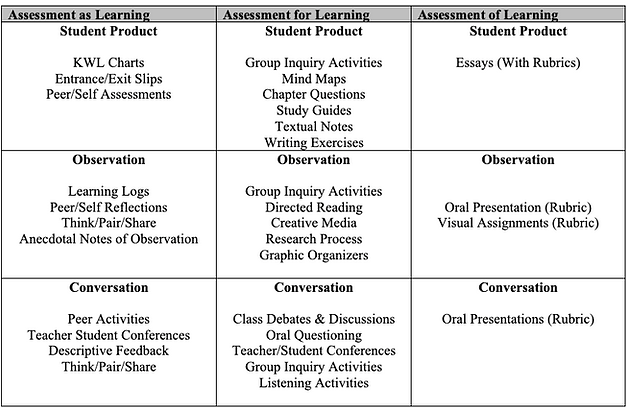
A final grade (percentage mark) is calculated at the end of the course and reflects the quality of the student’s achievement of the overall expectations of the course, in accordance with the provincial curriculum.
The final grade will be determined as follows:
Seventy percent (70%) of the grade will be based on evaluation conducted throughout the course. This portion of the grade should reflect the student’s most consistent level of achievement throughout the course, although special consideration should be given to more recent evidence of achievement.
Thirty percent (30%) of the grade will be based on a final evaluation administered at or towards the end of the course. This evaluation will be based on evidence from one or a combination of the following: an examination, a performance, an essay, and/or another method of evaluation suitable to the course content. The final evaluation allows the student an opportunity to demonstrate comprehensive achievement of the overall expectations for the course.