TIJ1O, Grade 9, Exploring Technologies
TIJ1O COURSE OUTLINE
Course Title: Exploring Technologies
Grade: 9
Ministry Course Code: TIJ1O
Course Type: Open
Credit Value: 1.00
Course Hours: 110
Department: Technological Education Courses
Revision Date: N/A
Policy Document:
Technological Education, The Ontario Curriculum, Grades 9 and 10, 2008 (Revised)
https://www.edu.gov.on.ca/eng/curriculum/secondary/teched910curr09.pdf
COURSE DESCRIPTION
This course enables students to further explore and develop technological knowledge and skills introduced in the elementary science and technology program. Students will be given the opportunity to design and create products and/or provide services related to the various technological areas or industries, working with a variety of tools, equipment, and software commonly used in industry. Students will develop an awareness of environmental and societal issues, and will begin to explore secondary and postsecondary education and training pathways leading to careers in technology-related fields.
OVERALL EXPECTATIONS
TECHNOLOGY FUNDAMENTALS
By the end of this course, students will:
· A1. demonstrate an understanding of the fundamental concepts and skills required in the planning and development of a product or service, including the use of a design process and/or other problem-solving processes and techniques;
· A2. demonstrate the ability to use a variety of appropriate methods to communicate ideas and solutions;
· A3. evaluate products or services in relation to specifications, user requirements, and operating conditions.
TECHNONOGICAL SKILLS
By the end of this course, students will:
· B1. use problem-solving processes and project-management strategies in the planning and fabrication of a product or delivery of a service;
· B2. fabricate products or deliver services, using a variety of resources
TECHNOLOGY, THE ENVIRONMENT, AND SOCIETY
By the end of this course, students will:
· C1. demonstrate an awareness of the effects of various technologies on the environment;
· C2. demonstrate an awareness of how various technologies affect society, as well as how society influences technological developments.
PROFESSIONAL PRACTICE AND CAREER OPPORTUNITIES
By the end of this course, students will:
· D1. follow safe practices and procedures when using materials, tools, and equipment;
· D2. identify careers in various technological fields, and describe the educational requirements for them
OUTLINE OF COURSE CONTENT

.
.
EVALUATION SCHEME
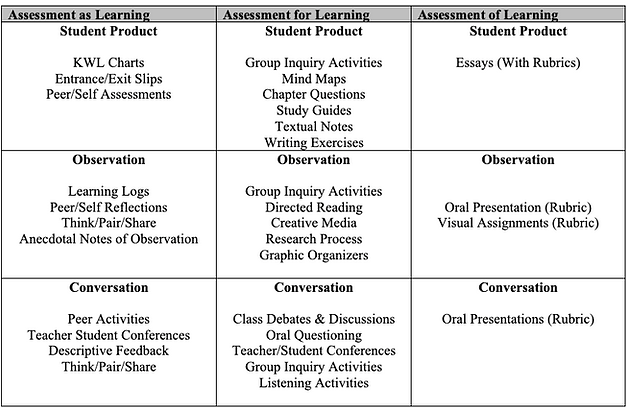
A final grade (percentage mark) is calculated at the end of the course and reflects the quality of the student’s achievement of the overall expectations of the course, in accordance with the provincial curriculum.
The final grade will be determined as follows:
Seventy percent (70%) of the grade will be based on evaluation conducted throughout the course. This portion of the grade should reflect the student’s most consistent level of achievement throughout the course, although special consideration should be given to more recent evidence of achievement.
Thirty percent (30%) of the grade will be based on a final evaluation administered at or towards the end of the course. This evaluation will be based on evidence from one or a combination of the following: an examination, a performance, an essay, and/or another method of evaluation suitable to the course content. The final evaluation allows the student an opportunity to demonstrate comprehensive achievement of the overall expectations for the course.